
Look, Corsica’s beaches get all the attention – Palombaggia, Rondinara, Saleccia. Fair enough, they’re stunning. But honestly, if you spend your whole week lying on sand, you’re missing about 80% of what makes this island so special. The interior of Corsica is wild, mountainous, full of villages where people still make their own cheese, and crossed by some of the best hiking trails in Europe. The truth is, the best things to do in Corsica beyond the beaches are often what travellers remember years later – not the sunburn from day three on the coast.
Why horseback trekking changes how you see Corsica

So what’s actually worth doing inland and off the sand ? One activity that keeps coming up among people who really know the island is horseback trekking through the maquis and mountain trails – you can find serious operators and route ideas on https://randonnees-equestres-corse.com if that’s something that appeals to you. I mention it now because it’s the kind of activity that fundamentally changes how you experience Corsica : you see places no car can reach, you move slowly through landscapes most tourists never set foot in, and you end the day at a mountain refuge with a glass of local wine. Not for everyone, but worth knowing about before you build your trip.
Hike a section of the GR20 (without doing the whole thing)
The GR20 has a reputation : hardest long-distance trail in Europe, 180 km across the spine of the island, 16 days of brutal mountain hiking. Not exactly a holiday for most people. But here’s the thing – you can do day hikes on sections of the GR20 without committing to the whole epic. And it gives you a proper taste of the high mountain Corsica that 95% of visitors never see.
The most accessible section is around the Bavella needles (Aiguilles de Bavella), in the south. From the Col de Bavella, you can do a 4-5 hour loop that takes you through dramatic granite spires, pine forests, and rocky passes. Bring proper shoes – sneakers don’t cut it. Bring water too, lots of it. In summer the heat is no joke even at altitude.
Other sections worth a day : the Lac de Nino area (Niolo region), or the Restonica gorges near Corte. Each one is a different Corsica.
Visit Corte, the historic heart of the island

If you only visit coastal towns, you miss the real Corsica. Corte, the old capital, sits in the middle of the island and is basically the cultural soul of the place. The citadel perched on its rock, the small streets, the Museum of Corsica (genuinely interesting, not one of those dusty regional museums you regret entering)…
Spend a day or two here. Use it as a base for the Restonica valley and the Tavignano gorges – both spectacular hikes starting essentially from town. The Restonica road itself is one of those roads where you grip the wheel the whole way, but the lakes at the end (Lac de Melo and Lac de Capitello) are worth it. Just don’t try it in July-August without going at 7 AM – parking becomes a nightmare and they’ve even started limiting access.
Drive (or ride) the spectacular mountain roads
The Corsican interior is laced with roads that are objectively crazy. Hairpin bends, no guardrails, drops you don’t want to think about, but views that make you stop the car every 10 minutes.
A few favourites :
- The Calanche de Piana on the west coast : red granite cliffs falling into the sea. The road is narrow and busy in summer – go early or at sunset. UNESCO-listed for a reason.
- The Col de Bavella road: dramatic, pine-scented, with the famous needles always in view.
- The Asco valley: less known, properly wild, ends in a tiny ski resort that doubles as a hiking base in summer.
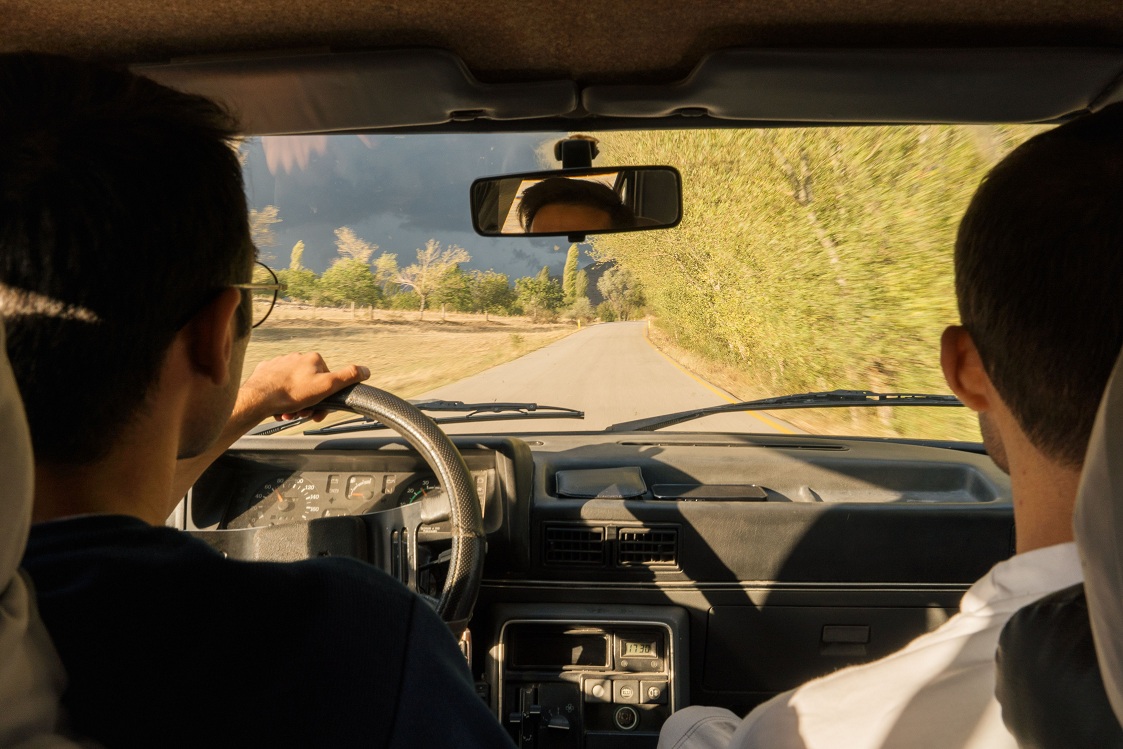
Honest tip : rent a small car. Not a 4×4 (you don’t need it), but definitely not a big SUV either. You’ll thank me when you cross a tour bus on a one-and-a-half-lane road with a thousand-foot drop on your side.
Explore the mountain villages of Castagniccia
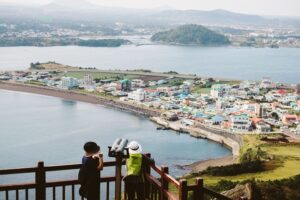
This is one of my favourite parts of Corsica and one of the least visited. La Castagniccia is a region of chestnut forests and stone villages in the northeast, between Bastia and Corte. The chestnut economy used to feed the whole island here – you can still buy chestnut flour, chestnut beer (try the Pietra brand), chestnut everything.
Villages worth driving to :
- La Porta: with its dramatic baroque bell tower
- Piedicroce: tiny, gorgeous, with an old church
- Morosaglia: birthplace of Pasquale Paoli, the Corsican independence leader
Roads are slow here. Distances on the map mean nothing – what looks like a 30-minute drive often takes 90 minutes. But the slowness is the point. You stop at a village fountain, you have a coffee, you talk to the one old guy on the square, and you understand something about Corsica you’d never get on a beach.
Horse trekking through the maquis
I mentioned this earlier and want to come back to it because, frankly, it’s one of the most distinctive things you can do in Corsica. The maquis – that dense, fragrant scrubland of myrtle, juniper, rockrose, immortelle – covers a huge part of the island. On foot you can hike it ; on horseback you experience it differently. The smell, the silence, the perspective from a bit higher up.
There are stables and equestrian centres especially in the Castagniccia and the south. Trips range from 1-hour rides to multi-day treks staying in shepherds’ huts (bergeries) where you eat what’s been cooked over a fire that morning. Even if you’re not a horse person, a half-day ride changes how you see the island.
Cost-wise, expect 40-60€ for an hour, around 80-120€ for a half-day, and 120-180€ per day for full-day trips. Multi-day treks with accommodation included sit around 150-200€ per day.
Eat in a proper Corsican mountain auberge
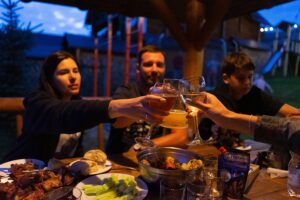
Coastal restaurants in Corsica are okay but mostly catered to tourists. The real food is in the mountains. Auberges – small inns, often family-run, often with a single set menu – are where you’ll eat what Corsicans actually eat.
What to expect :
- Charcuterie: real Corsican coppa, lonzu, prisuttu (ham) – from pigs that have run wild eating chestnuts. The taste is on another level.
- Brocciu: fresh sheep or goat cheese. Eaten plain, in cannelloni, in omelettes, in dessert.
- Wild boar stew: yes, really. Slow-cooked, with myrtle and red wine.
- Fiadone: traditional brocciu-and-lemon cake. Better than it sounds.
A solid auberge meal runs 30-45€ per person for multiple courses. Book ahead in summer – these places are small and locals know them too.
Snorkel or sea kayak the secret coves
Okay this is technically near the sea, but it’s not the “beach holiday” cliché. Corsica has hundreds of tiny coves that you can only reach by kayak or small boat. The Scandola nature reserve in the northwest is the obvious one – UNESCO-listed, accessible only by boat from Porto or Calvi. Eagles, dolphins, water so clear it’s almost ridiculous.
If you don’t want to do a guided trip, rent a kayak in Porto, Girolata, or Bonifacio for a few hours and explore on your own. Bonifacio sea caves in particular are spectacular. Roughly 30-50€ for a half-day rental.
Question for you : ever paddled into a sea cave so big you barely see the entrance once you’re inside ? It’s one of those experiences that sticks.
Visit the prehistoric sites of Filitosa
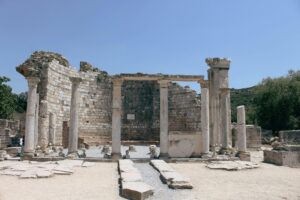
Most people don’t realise Corsica has serious prehistoric heritage. Filitosa, in the south near Sartène, is an open-air site with carved stone statues (menhirs) dating back over 3,000 years. Some of them have actual faces. It’s surprisingly atmospheric, especially late afternoon when the light hits the stones.
Cost : about 8€ entry. Allow 1h30 on site. Combine it with a visit to Sartène (one of the most authentic-feeling towns on the island) for a perfect inland day.
Discover the Désert des Agriates
This is the wild northwest coast – a stretch of empty, untouched land between Saint-Florent and the Balagne. It’s called a desert because it’s dry, rocky, and barely inhabited. You can hike portions of the Sentier des Douaniers (Customs Officers’ Path) along the coast, swim at hidden beaches like Saleccia or Lotu (yes, beaches, but ones most people don’t reach because you need a boat or a serious 4×4).
It’s also one of the best areas for wild camping, if that’s your thing. Just check current regulations – they’ve tightened.
A few honest tips for going beyond the beaches
- Rent a car. Public transport in Corsica exists but it’s limited and slow. Without wheels, you stay coastal.
- Don’t try to see everything. Corsica is bigger than people think – about 200 km north to south, but with mountain roads that double or triple driving times.
- Mix coast and mountain. The ideal Corsica trip alternates. Three days coast, three days inland, three days wherever you want to spend more time.
- Go in May, June or September. July and August are crowded and expensive. Outside summer, the interior is glorious and the roads are empty.
- Learn five words of Corsican. Salute (hello), grazia (thanks), cumu va (how are you). It opens doors you wouldn’t believe.
Final thoughts
The beaches are great. Nobody’s saying skip them. But if you fly to Corsica and only see the coast, you’ve basically gone to a Mediterranean island that could be anywhere. The mountains, the villages, the food, the prehistoric sites, the horseback rides through the maquis – that’s where Corsica actually is Corsica. It’s a different rhythm, a different smell, a different feeling entirely.
So if you’re planning a trip and wondering whether to spend that fifth day at another cove or to drive inland into the mountains, my advice : go inland. Every time. Because next year, you’ll remember the beach as “nice.” But you’ll remember that auberge dinner in a mountain village with the dogs sleeping under the table for the rest of your life.
Related Posts
South of France in 7 days : a road trip itinerary that actually works
Let's get straight to the point. A 7-day road trip…